


The Senses & Society Special Issue: The Ethnographic Palimpsest
Beth co-published an article with fellow anthropologist Laurian Bowles exploring the affinity between feminist ethnographic research methods and a politically attuned epistemology of the senses, or what they call a “sensory feminist orientation to ethnography.” Through a series of field notes exchanged during longterm ethnographic fieldwork in Belize and Ghana, they explore the benefits of attuning to embodiment and “bodily ways of knowing” in the field, and the consequences when ethnographers are encouraged to excise certain field encounters from scholarship.
The article is included as part of a special issue Beth and Laurian co-edited: The Ethnographic Palimpsest: Excursions in Paul Stoller’s Sensory Poetics, edited by Beth Uzwiak and Laurian Bowles. Volume 16 (2).
This special issue commemorates the thirty-year legacy of Paul Stoller’s scholarship and highlights his continuing influence on sensory theory, method and writing going forward. At the time of their publication, Stoller’s The Taste of Ethnographic Things: The Senses in Anthropology (1989b) and Sensuous Scholarship (1997) were part of a constellation of critical reflections about how ethnography can best represent human life given our divergent subjectivities as researchers within the context of anthropology’s colonial history. In this special issue, we bring together contributors from anthropology, ethnomusicology, gender studies, and political science and feature ethnographic accounts from Central America, West Africa, Southern Africa, Europe, and South Asia that expand Stoller’s sensory horizons.
Epistolary storytelling: a feminist sensory orientation to ethnography
by Beth Uzwiak & Laurian Bowles
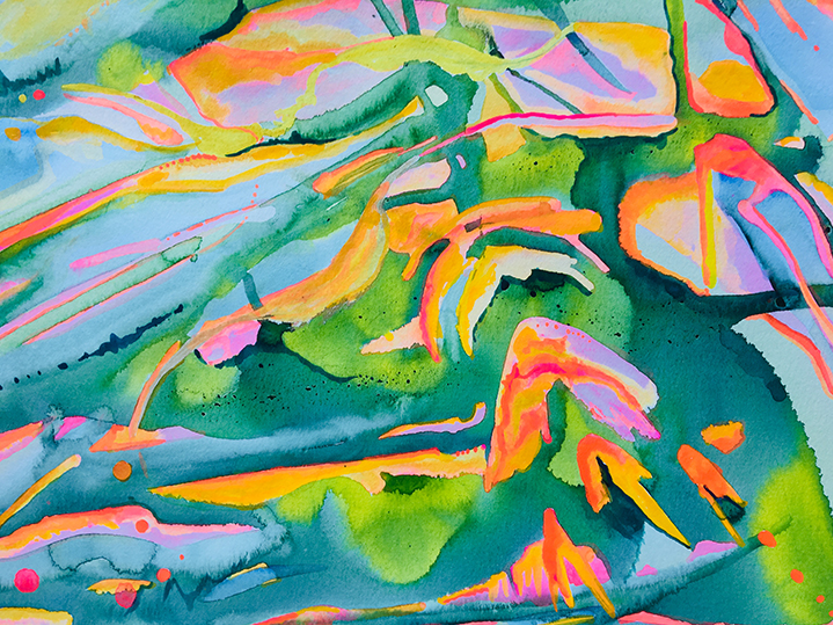
This article presents a series of letters the authors exchanged while conducting ethnographic research in Belize and Ghana. The letters reveal an affinity between feminist ethnographic praxis and a politically attuned epistemology of the senses, what the authors call a sensory feminist orientation to scholarship. Expanding on criticism of the way sensory hierarchies inform Western knowledge-building, the authors reevaluate their own epistolary exchange as a methodological provocation. As stories, the letters detail what the authors orient themselves toward in the field, as well as embodied moments of disorientation: danger, violence and estrangement. Untidy and raw, they offer readers an opportunity to “listen to sense” and, in the process, consider the consequences when ethnographers are encouraged to excise certain field encounters from scholarship. The article includes paintings that Beth Uzwiak created while in the field as a component of the authors’ sensory experiment in epistolary ethnography. Their focus on the affective registers of storytelling contributes to broader efforts to disrupt the androcentric tendencies of ethnographic voice.